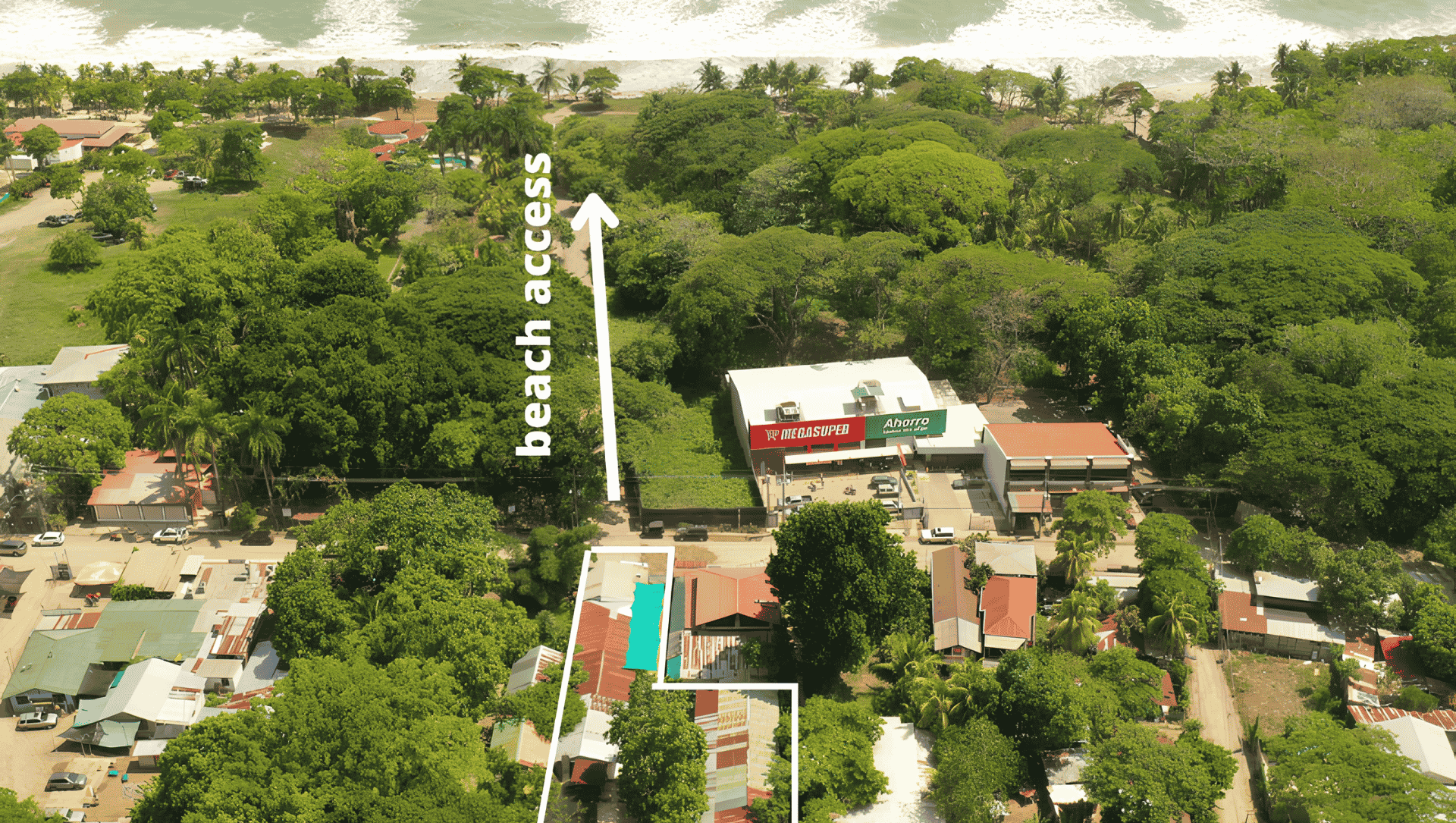
Santa Teresa has evolved from a quiet surf village into one of Costa Rica's most sought after destinations for international property investment. The combination of world class beaches, year round warmth and a growing community of expats and digital nomads makes this corner of the Nicoya Peninsula particularly attractive to foreign land buyers looking to build a dream home, develop rental villas or secure a long term asset in paradise.
We work with international clients every week who want to purchase land in this area, and the questions are remarkably consistent: Can I actually own land as a foreigner? What legal traps should I avoid? How much will the process really cost, and how long will it take?
This guide answers those questions with the practical, ground level detail that comes from a team that grew up here and has guided countless foreign buyers through successful transactions.
Foreign Ownership Rights in Costa Rica
Costa Rica stands out in Central America for its welcoming stance toward foreign property ownership. International buyers enjoy the same ownership rights as Costa Rican nationals, with no restrictions on the percentage of land a foreigner can own and no requirement to partner with a local citizen.
You can hold title in your own name, through a foreign corporation or via a Costa Rican entity. The constitution protects private property rights robustly, and the legal framework has been tested and refined over decades of international investment.
The two critical exceptions apply to maritime zones, the first 200 meters from the high tide line on beaches, and border areas. Within the maritime zone, the first 50 meters are public domain and cannot be owned by anyone. The next 150 meters fall under a concession system that allows long term leases but not outright ownership. Most desirable land in Santa Teresa sits well beyond this restricted zone, but it is essential to verify the exact classification of any parcel near the coast. Properties marketed as close to Playa Santa Teresa or Playa Hermosa need careful measurement from the registered maritime baseline to confirm they fall outside the restricted zone.

Property Title Types and What They Mean for Buyers
Costa Rica uses three main property registration systems, and understanding which applies to your target parcel will shape your entire transaction.
Registered titled property, property inscribed in the National Registry, offers the highest security. These parcels have a known legal history, clear boundaries surveyed by a registered topographer, and a folio number in the public registry. When you see land described as having a registered title, you can trace ownership back through documented transfers and verify that no liens, mortgages or disputes cloud the title. This is the gold standard and the type we recommend to international buyers whenever possible.
Concession land applies primarily to beachfront parcels in the maritime zone. The municipality grants long term leases, typically renewable, rather than fee simple ownership. Concessions can be valuable for certain commercial uses, but they come with restrictions on improvements, require ongoing payments to the municipality, and cannot be financed through most traditional lenders. Always confirm whether land is titled or concessioned before making an offer.
Rights of possession, derechos de posesión, represent a claim based on occupation and use rather than registered title. In some rural areas, families have farmed or lived on land for generations without formal registration. While these rights can eventually be converted to full title, the process is complex, expensive and uncertain. We advise foreign buyers to avoid rights of possession properties unless they have deep local knowledge and risk tolerance.

The Due Diligence Process: What You Cannot Skip
A registered title does not guarantee a clean transaction. Costa Rica's property system requires thorough verification at multiple levels, and shortcuts here have cost foreign buyers dearly.
Title study is the foundation. A qualified attorney will pull the complete history from the National Registry, verifying current ownership, searching for liens, mortgages, embargos, annotations and any other encumbrances. They will also check that boundaries match the survey and that the seller has legal capacity to transfer the property.
Municipal records must be checked separately. Outstanding property taxes, impuesto sobre bienes inmuebles, or land use violations may not appear in the Registry but become the buyer's problem after closing. Your attorney should obtain a certificate from the local municipality showing all taxes are current and no pending issues exist.
Physical inspection and survey are non negotiable. Hire a registered topographer to verify boundaries on the ground, especially in areas where neighbouring properties lack fences or where natural features like rivers have shifted over time. Confirm that access roads or easements shown on paper actually exist and are passable year round.
Environmental and land use restrictions can limit what you build or how you develop the property. Some areas near rivers, wetlands or steep slopes have protected status. The local municipality's regulatory plan, plan regulador, may impose setback requirements, maximum coverage, height restrictions or architectural guidelines. If you plan to subdivide or develop commercially, verify zoning explicitly.
Water availability and utility access vary widely. Some parcels have connection to ASADA, community water associations, others rely on wells, and some have no proven water source. Electricity availability, road maintenance responsibilities and internet infrastructure all affect both construction cost and future property value.

Environmental Regulations and Setbacks in Santa Teresa
Understanding local environmental and zoning rules is critical before you commit to a purchase, especially in an ecologically sensitive area like Santa Teresa.
Maritime zone restrictions apply to properties within 200 meters of the mean high tide line. Verify your parcel's exact distance from Playa Santa Teresa, Playa Hermosa or other beaches using the official maritime zone baseline registered with the municipality. Properties outside this zone can be owned outright, while those within the concession band face stricter development controls.
Waterway buffers protect rivers and streams throughout the region. If your property borders Río Bongo or other waterways, expect protected forest buffer requirements that limit where you can build. These setbacks can range from 10 to 50 meters depending on the waterway classification.
Typical residential setbacks in Santa Teresa's residential zones often include five meter front and side setbacks and three meter rear setbacks, though exact requirements depend on the specific zone and lot size under Puntarenas cantonal regulations. Always request a letter from the municipality, certificado de uso de suelo, confirming permitted uses and setback requirements for your specific parcel before finalising your offer.
Protected forest and slope restrictions can apply to steep terrain or areas with significant tree cover. Some lots may have a percentage designated as protected forest that cannot be cleared, limiting your buildable area.
Legal Structure: Buying as an Individual vs Corporation
Foreign buyers can hold Costa Rican land as individuals or through a corporation, and each approach carries distinct trade offs.
Individual ownership is simpler and more transparent. Title is in your name, transfer taxes are straightforward, and you avoid annual corporate filing fees. The downsides include full personal liability, public disclosure of your ownership in the Registry, and potentially more complex estate planning if you want heirs to avoid probate.
Costa Rican corporation, Sociedad Anónima, is a common structure for foreign buyers. A local corporation can own property and may provide advantages for liability and estate planning depending on the buyer's circumstances. Corporate ownership also creates annual administrative, accounting and tax obligations.
Foreign corporation can also hold title, but it may require additional documentation and introduce complexity when financing or selling. Buyers considering this structure should obtain qualified legal and tax advice before proceeding.

Transaction Costs: The Complete Picture
One of the biggest surprises for international buyers is the array of closing costs and professional fees that sit on top of the purchase price.
Transfer tax runs 1.5 percent of the registered value or sale price, whichever is higher.
Notary fees typically range from 1 to 1.5 percent of the transaction value. The notary prepares the deed, verifies identities, confirms title clearance and registers the transfer with the National Registry.
Stamps and registration fees add another 0.5 to 0.75 percent, covering the cost of recording the deed and issuing new title documents.
Attorney fees for due diligence, title study and transaction management generally run $1,500 to $3,000 for straightforward land purchases, though complex transactions or corporate structures may cost more.
Survey costs for a registered topographer to verify or update boundaries can range from approximately $800 to $1,500 depending on lot size and terrain.
Title insurance, while optional, may provide protection against certain hidden defects or claims that emerge after closing.
| Cost Item | $100,000 Land Purchase | $250,000 Land Purchase | $500,000 Land Purchase |
|---|---|---|---|
| Transfer Tax at 1.5% | $1,500 | $3,750 | $7,500 |
| Notary Fees at 1 to 1.5% | $1,000 to $1,500 | $2,500 to $3,750 | $5,000 to $7,500 |
| Stamps and Registration at 0.5 to 0.75% | $500 to $750 | $1,250 to $1,875 | $2,500 to $3,750 |
| Attorney Fees | $1,500 to $2,500 | $1,500 to $2,500 | $2,000 to $3,000 |
| Survey | $800 to $1,200 | $1,000 to $1,500 | $1,200 to $1,800 |
| Title Insurance, Optional | $500 to $800 | $1,250 to $2,000 | $2,500 to $4,000 |
| Total Transaction Costs | $5,800 to $8,250 | $11,250 to $15,375 | $20,700 to $27,550 |
Worked Example: Typical Santa Teresa Land Purchase
A typical 2,000 square meter titled lot 800 meters from the beach in Santa Teresa, purchased for $180,000, could involve approximately $2,700 in transfer tax, $1,800 to $2,700 in notary fees, $900 to $1,350 in stamps and registration, $1,500 to $2,500 in attorney fees, and $800 to $1,200 in survey costs. Buyers should obtain a transaction specific estimate from their attorney or notary before signing.
Financing and Payment Considerations
Many land transactions in Santa Teresa are cash deals. Costa Rican bank financing can be more limited for raw land and foreign buyers, with larger down payment requirements and extensive documentation.
Seller financing is also available in some transactions, particularly for larger parcels. If the seller offers financing, ensure your attorney documents the arrangement correctly and establishes terms that protect both parties.
International buyers should also prepare source of funds documentation and allow adequate time for international transfers and compliance reviews.
Purchase Process Timeline: Step by Step
Understanding the typical timeline and documentation requirements for each stage helps you plan your purchase and avoid surprises.
Stage 1: Offer and Initial Deposit
Once you identify a property, you submit a written offer through your agent or attorney. If the seller accepts, a deposit may be placed according to the purchase agreement. The agreement should outline the sale terms, contingencies and timeline.
Stage 2: Due Diligence Period
Your attorney conducts the title study, verifies municipal records, obtains land use information and coordinates the boundary survey. Buyers should also verify access, water sources and utilities.
- Title study report from the National Registry
- Municipal tax verification
- Land use certificate
- Updated survey by a registered topographer
- Water availability confirmation
- Environmental review where applicable

Stage 3: Closing and Title Transfer
Once due diligence clears and financing, if applicable, is confirmed, the notary prepares the final deed. Funds are transferred according to the closing agreement and the ownership transfer is filed with the National Registry.
A straightforward transaction may take approximately 45 to 90 days from accepted offer to recorded title. Transactions involving financing, concessions, corporate structures or title issues may take longer.
Red Flags: Warning Signs to Investigate
Seller information does not match the Registry. Ownership and legal authority to sell should be independently verified.
Survey information does not match physical boundaries. Ask a registered topographer to verify the property before closing.
Access is via an informal road without a registered easement. Physical access does not necessarily provide permanent legal access.
Neighbours dispute boundaries or claim encroachment. Resolve discrepancies before completing the transaction.
Water availability is promised but not documented. Obtain evidence confirming the available water source.
The seller pressures you to skip due diligence. Buyers should not sacrifice title, survey, access, water or zoning verification simply to accelerate a closing.
Real Buyer Case Study: Why Access Verification Matters
A Santa Teresa land transaction provides an important reminder of why legal access should always be verified before closing. In this case, a buyer discovered after completing the purchase that the access road shown on the property survey was actually a neighbour's private driveway. The property did not have the registered legal easement the buyer had expected.
The key lesson for prospective buyers is simple: physical access does not necessarily mean legal access. A road may exist on the ground and may have been used for years, but that does not automatically give a property owner a permanent legal right to use it.
Before purchasing land in Santa Teresa, your attorney should confirm that any required easement, known locally as a servidumbre, is properly registered and provides adequate legal access to the property. A qualified survey professional should also verify that the physical access corresponds with the registered survey and property records.
Other transaction examples have involved boundary encroachments and mortgage liens discovered after closing. These situations demonstrate why buyers should complete a thorough title review, boundary survey, access verification and legal due diligence before a land purchase becomes unconditional.
Browse current Santa Teresa land for sale
Ongoing Ownership Costs and Obligations
Owning land in Costa Rica involves recurring costs beyond the initial purchase.
Property tax, impuesto sobre bienes inmuebles, is generally based on the municipality's assessed property value. Confirm the current assessment and obligations for the specific property before purchasing.
Corporate maintenance may apply if property is held through a Costa Rican corporation. Buyers should budget for applicable accounting, legal and tax obligations.
Association fees may apply where property is located within a gated community or development with shared roads, security, water systems or amenities.
Maintenance and security are also important for vacant tropical land. Vegetation management, drainage, road maintenance and periodic inspections can help protect the property.
Why Work with Local Experts Who Know Santa Teresa
Real estate transactions in Costa Rica involve considerations that may differ significantly from those in North America or Europe. Santa Teresa also presents specific questions involving maritime zones, seasonal road conditions, ASADA water systems, terrain and local zoning.
Working with professionals who know the area can help you compare properties based on more than price and ocean views. Access, utilities, development potential, buildable area and legal status all contribute to whether a parcel is appropriate for your goals.

If you are serious about purchasing land in Santa Teresa, explore current properties and speak with the Coldwell Banker Sunset Reef Realty team about opportunities that match your plans.
View available land in Santa Teresa
Frequently Asked Questions
How long does it take to buy land in Santa Teresa?
A typical land purchase may take approximately 45 to 90 days from accepted offer to recorded title. Transactions involving financing, corporate structures, concessions or title issues may require additional time.
Do I need a Costa Rican corporation to buy land?
No. Foreign buyers can generally hold qualifying titled property personally or through an appropriate entity. The best ownership structure depends on legal, tax, liability and estate planning considerations.
Can I get financing as a foreigner to buy land in Costa Rica?
Financing options for raw land can be more limited for international buyers. Cash purchases and seller financing are common alternatives. Buyers should investigate financing before committing to a property.
What are property taxes on land in Santa Teresa?
Property taxes are generally based on the municipality's assessed value. Buyers should verify the current assessed value, tax balance and applicable municipal obligations for the specific parcel before closing.
Start Your Santa Teresa Land Search With the Right Questions
Buying land in Santa Teresa is not simply about finding the best ocean view or the largest parcel within your budget. A successful purchase begins with understanding exactly what you are buying, what you can legally build, how you will access the property and whether the infrastructure supports your plans.
Before committing to a parcel, verify title, survey boundaries, legal access, water, land use, environmental restrictions and the ownership structure that fits your circumstances.
Coldwell Banker Sunset Reef Realty can help you compare current land opportunities throughout Santa Teresa and surrounding communities while coordinating with the appropriate legal and technical professionals for your transaction.
Browse current Santa Teresa land for sale
Explore Santa Teresa real estate
Contact Coldwell Banker Sunset Reef Realty
Coldwell Banker Sunset Reef Realty
Costa Rica Direct: +506 8752 7000
US: +1 239 504 4300
20 m South from Hotel Nantipa, Santa Teresa de Cóbano, Puntarenas, Costa Rica
This article provides general real estate information and should not be considered legal, tax or financial advice. Property classification, regulations, taxes, fees and development requirements should be independently confirmed for the specific property and transaction with qualified Costa Rican professionals.