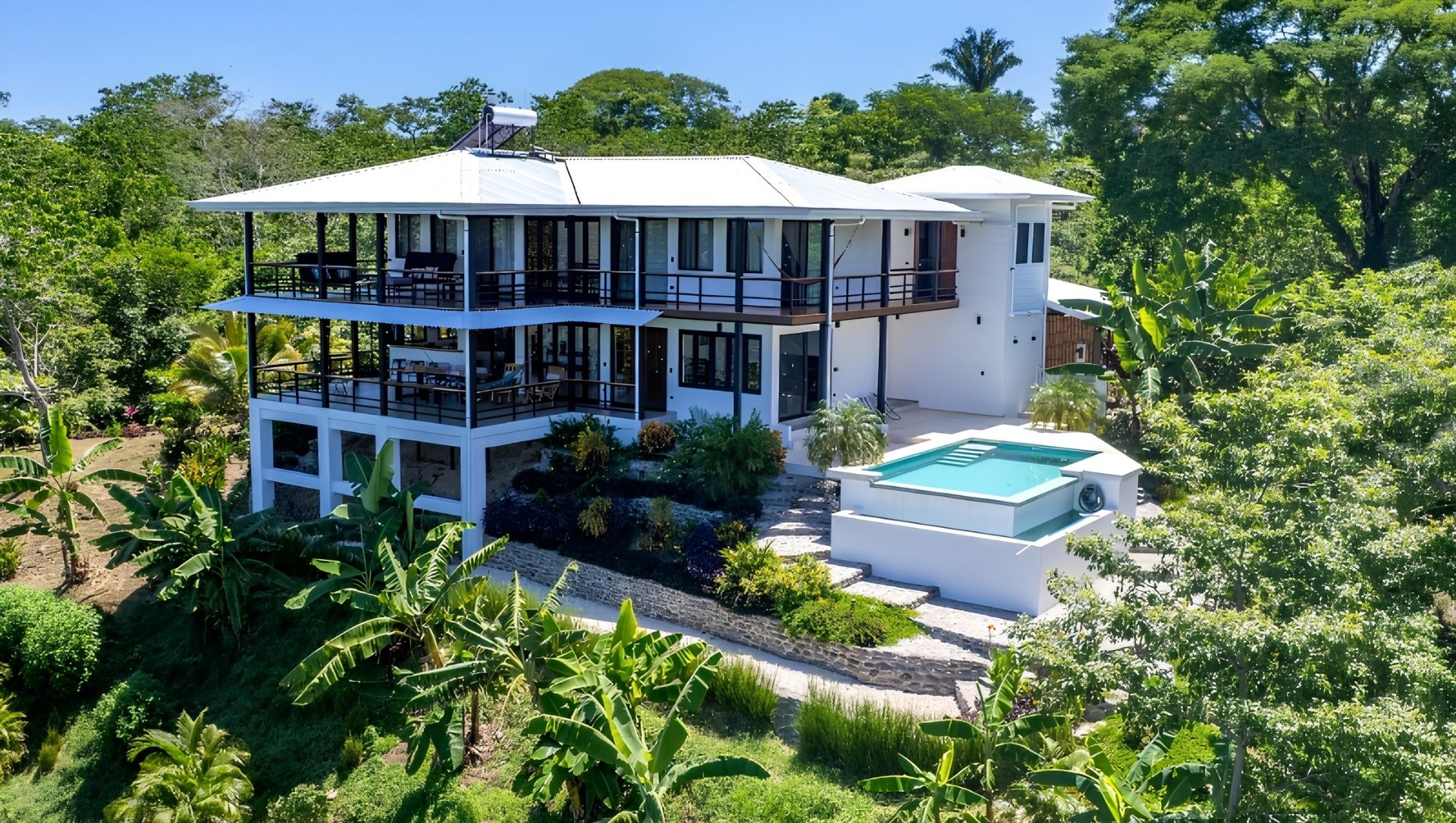
You find a Costa Rica property with the beach directly in front of you. The location looks perfect, the property suits what you want, and you are ready to look more seriously.
Then comes the question that can change the entire transaction:
Is this titled property, or does it involve a Maritime Zone concession?
For anyone considering beachfront real estate in Costa Rica, this distinction needs to be understood before discussing price, renovations, rental potential, construction, or future plans.
Much of Costa Rica's coastline is governed by the Zona Marítimo Terrestre, commonly called the Maritime Zone. Within this area, ordinary private ownership may not apply. Instead, certain coastal land can be occupied and used through a concession granted under Costa Rican law.
A concession is not the same as owning titled land.
That does not automatically make concession property unsuitable. It means buyers need to understand exactly what rights are being acquired, what restrictions apply, what payments are required, and what must be verified before proceeding.
What Is Costa Rica's Maritime Zone?
Costa Rica's Maritime Zone generally extends 200 metres inland from the ordinary high tide line along much of the country's coastline.
It is divided into two principal areas.
The First 50 Metres
The first 50 metres are generally considered the Zona Pública, or Public Zone.
This portion is intended for public use and generally cannot be privately owned or treated as an ordinary residential building lot.
For a buyer, this creates an immediate distinction. A property being directly beside the ocean does not necessarily mean that the land can be purchased with ordinary private title.
The Following 150 Metres
The next 150 metres generally form the Zona Restringida, or Restricted Zone.
This is where concessions become particularly relevant.
Rather than transferring ordinary private title to the land, qualifying rights to use and develop a parcel may be granted through the concession system. The legal structure is therefore different from purchasing titled property outside the Maritime Zone.

Is Every Beachfront Property in Costa Rica Concession Property?
No.
This is one of the most important things for coastal buyers to understand.
Some coastal properties have registered private title. Other parcels fall within the Maritime Zone and may involve concession rights. Protected areas can also be subject to additional restrictions.
Terms such as "beachfront," "oceanfront," and "steps from the beach" describe location. They do not establish the legal status of the land.
Two properties that appear almost identical when viewed online can involve completely different legal rights.
Before becoming committed to a beachfront property, a qualified Costa Rican attorney should establish which legal regime applies to the specific parcel.
What Is a Beachfront Concession?
A concession gives the concession holder defined rights to occupy and use a particular parcel according to Costa Rican law, municipal requirements, applicable planning rules, and the terms of the concession itself.
It should not be treated as another name for private title.
With titled property, a buyer is generally acquiring registered ownership of the land.
With concession property, the buyer is acquiring or receiving rights that exist within a legal concession framework. Those rights may include conditions concerning use, development, payments, transfers, compliance, and renewal.
This is why the actual concession documents matter.
A buyer should understand those documents before deciding whether the property is appropriate for the intended use.

Who Grants and Administers Maritime Zone Concessions?
Local municipalities have an important role in the administration of Maritime Zone concessions.
This makes the location of the property significant from both a legal and administrative perspective.
A buyer should not assume that the process associated with concession property in one Costa Rican canton will be identical to the process in another.
Municipal records, concession status, applicable planning rules, valuations, permitted uses, and administrative requirements need to be checked for the actual parcel.
A Real Example From Puntarenas
The Municipality of Puntarenas maintains a dedicated Maritime Zone administrative process for concessions. Its official website provides separate concession requirements for individuals and legal entities, together with a concession application form.
This is a practical example of why a buyer needs to identify the municipality responsible for the specific property rather than relying on general statements about buying beachfront real estate in Costa Rica.
The Municipality of Puntarenas also identifies a specific Zona Marítimo Terrestre unit within its municipal administration.
Buyers evaluating property within Puntarenas canton should therefore expect municipal concession records to form part of the review process.
Official municipal information can be reviewed through the Municipality of Puntarenas concession information page.
Considering a Concession Property?
If you have already found a beachfront property that interests you, establish its legal structure before becoming financially committed.
Coldwell Banker Sunset Reef Realty can help you review the available property information, understand the location, and identify questions that should be addressed during independent legal due diligence.
Contact Coldwell Banker Sunset Reef Realty to discuss the concession or beachfront property you are evaluating.
Can Foreign Buyers Hold Concession Rights?
This is an area where buyers need specific legal advice.
Costa Rican law places restrictions on foreign interests in Maritime Zone concessions. Those restrictions can affect whether a foreign individual or a company with foreign ownership can hold particular concession rights.
Do not assume that forming a Costa Rican corporation automatically resolves the issue.
The ownership and structure of that corporation can matter.
If you are an American, Canadian, or another foreign national considering concession property, ask a qualified Costa Rican attorney to explain exactly what the current law permits in your circumstances.
This should happen before paying a substantial deposit or committing to a particular ownership structure.
What Should You Verify Before Acquiring a Concession Property?
The first objective is not simply to move through the transaction quickly.
It is to establish exactly what you are being offered and whether those rights support what you want to do with the property.
Confirm the Parcel's Legal Status
Your attorney should determine whether the property is privately titled, within the Maritime Zone, subject to a concession, or governed by another applicable legal regime.
Do not rely solely on the seller's description or the wording used in a real estate listing.
Review the Existing Concession
If you are considering property with an existing concession, obtain and review the actual concession records.
Important questions include:
- Who currently holds the concession?
- Is the concession currently valid?
- When was it granted?
- When does it expire?
- Are concession payments current?
- What uses are permitted?
- Are there recorded violations or unresolved issues?
- Can the rights legally be transferred to the proposed buyer?
- Which municipal or other approvals are required?
These are questions about the specific property. A general explanation of concession law cannot replace document review.
Verify the Boundaries
Coastal boundaries deserve particular attention.
Your legal and technical advisers should confirm that the parcel being marketed corresponds with the official plans and records.
A fence, driveway, garden, wall, or existing building does not by itself establish the legal boundary of a concession.
Check Planning and Environmental Restrictions
Being able to acquire concession rights does not necessarily mean you can build whatever you want.
Zoning, planning requirements, environmental rules, concession conditions, and other restrictions can affect development.
This is particularly important when the intended use involves construction, expansion, rental activity, commercial activity, or significant alteration of an existing property.
Check Existing Financial Obligations
If a concession carries municipal payments or other obligations, confirm their current status.
Outstanding balances or compliance problems should be identified before the transfer rather than discovered after the transaction has progressed.

What Is the Canon?
A concession holder may be required to pay an annual canon associated with the concession.
This is one area where buyers should work from the actual municipal record rather than an informal estimate.
Article 49 of Costa Rica's Regulation to the Maritime Zone Law provides a framework for annual concession canon rates. Under the current text, the relevant municipality can establish rates through a technically supported regulation that forms part of the corresponding coastal regulatory plan.
The regulation establishes the following maximum percentages based on the applicable appraisal:
- Agricultural use: up to 2 percent
- Residential use: up to 3 percent
- Hotel, tourism, or recreational use: up to 4 percent
- Commercial, industrial, mining, or extractive use: up to 5 percent
The regulation also states that the annual canon cannot be lower than 0.25 percent of the applicable appraisal.
The official text of Article 49 can be reviewed through Costa Rica's Sistema Costarricense de Información Jurídica.
These percentages should not be used to guess the payment for a particular property.
For an actual purchase, request the current canon amount associated with the specific concession and verify:
- the current municipal appraisal
- the applicable use classification
- the percentage being applied
- the current annual amount
- when payments are due
- whether payments are current
- whether a reassessment is pending or possible
- whether any outstanding balance exists
A real municipal record is more useful to a buyer than a hypothetical canon calculation.

Why the Municipality Matters
The national legal framework establishes the broader concession system, but municipal administration matters when examining an individual property.
For example, the Municipality of Puntarenas publicly maintains concession application materials and Maritime Zone administrative resources. Other coastal municipalities can have their own records, procedures, regulatory plans, and administrative requirements.
This is why statements such as "Costa Rica concessions work this way" should always be followed by another question:
Which municipality has authority over this particular parcel, and what do its records show?
A proper review should identify the responsible municipality and obtain the relevant records before a buyer relies on assumptions about the property's status.
Can a Concession Be Transferred?
Concession rights can involve transfer procedures and approvals that differ from an ordinary titled property sale.
If you are purchasing an existing concession interest, do not assume that signing a private purchase agreement automatically completes the legal transfer.
Your attorney should establish the required process and confirm that you qualify to receive the rights being transferred.
This also matters when considering resale.
Before purchasing, understand what a future buyer would need to do if you eventually decide to sell.
What About Renewal?
A concession exists for a defined legal term rather than indefinitely in the same manner as ordinary private title.
Buyers should therefore establish the remaining term before purchasing.
Ask:
- When was the concession granted?
- When does it expire?
- What is required for renewal?
- Is the current holder fully compliant?
- Are all required payments current?
- Are there outstanding municipal issues?
Do not treat renewal as an automatic administrative formality unless your attorney has confirmed how the current rules apply to the particular concession.
The remaining concession term can be an important part of evaluating both the current purchase and a future resale.
Have a Property in Mind? Evaluate It Before Making an Offer
General information about concession law is useful, but the most important information concerns the particular property you are considering.
Coldwell Banker Sunset Reef Realty can help you identify available property information and discuss the location before you arrange the independent legal review required for a purchase.
Request a consultation about a beachfront or concession property.
Red Flags When Looking at Beachfront Property
The Seller Cannot Clearly Explain the Legal Status
A beachfront listing should have a clear answer regarding whether the property is titled or concession based.
Uncertainty deserves investigation rather than assumptions.
The Property Is Marketed as Titled Without Supporting Records
Have your attorney verify the relevant Registry records and plans.
Marketing language is not legal proof.
Existing Buildings Do Not Match the Records
An attractive home can still have permitting, boundary, or compliance problems.
Verify the legal status of the existing construction and confirm that the intended use is permitted.
The Concession Is Close to Expiration
A short remaining term does not automatically make the property unsuitable, but renewal becomes a central part of the legal review.
Payments or Municipal Obligations Are Outstanding
Confirm that the concession is in good standing before acquiring it.
Someone Suggests a Company Automatically Solves Foreign Ownership Restrictions
Corporate ownership structures should be reviewed by your own Costa Rican attorney.
A Costa Rican company should not be treated as an automatic solution to restrictions that may apply to foreign participation in concession rights.
What a Real Concession Review Should Produce
A useful concession review should result in more than a verbal statement that everything appears acceptable.
Before becoming committed to the transaction, the buyer and the buyer's advisers should be able to identify the concession holder, the concession term, the municipal authority, the applicable land use, the current canon, the payment status, the permitted activities, the relevant plans, and the requirements for any proposed transfer.
Consider a buyer evaluating a coastal home advertised for residential use. The visual condition of the house and its proximity to the beach may be appealing, but those facts alone do not answer the legal questions.
The review still needs to establish whether the parcel is titled or concession based, whether the existing residence is consistent with the applicable records, whether the concession permits the intended use, whether the canon is current, and whether the proposed buyer can legally receive the rights.
This document based approach is more useful than relying on assumptions created by the appearance of the property.
Why Property Specific Due Diligence Matters
There is no useful shortcut for beachfront due diligence.
Costa Rica's coastline includes titled properties, concession properties, and land affected by environmental or other legal protections.
The right question is therefore not simply:
"Can foreigners buy beachfront property in Costa Rica?"
A better question is:
"What legal rights apply to this particular beachfront property, and can I acquire them?"
That question can be answered through the correct records, independent legal advice, municipal verification, and a clear understanding of what you want to do with the property.
When you explore beachfront properties in Costa Rica, establish the legal structure early so you can focus your attention on properties that genuinely fit your plans.
Questions to Ask Before Making an Offer
Before becoming financially committed to a beachfront property, ask:
- Is the property titled or concession based?
- Does any portion fall within the Maritime Zone?
- Which municipality has authority over the parcel?
- Who currently holds the registered rights?
- If there is a concession, when does it expire?
- Is the concession in good standing?
- What is the current canon amount?
- What appraisal and use classification determine that canon?
- Are there restrictions affecting me as a foreign buyer?
- What uses and development are permitted?
- Are the existing buildings properly authorized?
- What approvals are required to transfer the rights?
- Are environmental restrictions relevant?
- Has my own Costa Rican attorney reviewed the documents?
A good property search should make these questions easier to answer, not discourage you from asking them.

Frequently Asked Questions
What is Costa Rica's Maritime Zone?
The Maritime Zone generally covers the first 200 metres inland from the ordinary high tide line along much of Costa Rica's coastline. The first 50 metres generally form the Public Zone. The following 150 metres generally form the Restricted Zone, where concession rules can apply.
Is concession property the same as titled property?
No. Titled property involves registered private ownership. A concession provides defined rights under Costa Rica's concession framework and remains subject to the concession terms and applicable law.
Can Americans acquire concession property in Costa Rica?
Foreign participation in Maritime Zone concessions is subject to legal restrictions. Americans and other foreign buyers should obtain legal advice concerning the specific concession and proposed ownership structure before committing to a purchase.
Can I buy titled beachfront property in Costa Rica?
Yes, titled coastal properties do exist. A property's physical proximity to the ocean does not by itself determine whether it is titled or concession property. The legal status must be verified through the appropriate records.
How much is the annual concession canon?
There is not one universal payment amount for every concession. Article 49 provides ranges connected to the applicable appraisal and property use, while the responsible municipality establishes the applicable rate through the relevant regulatory framework. Buyers should request the actual canon record for the concession they are evaluating.
Does a concession last forever?
No. Concessions are granted for defined terms. Buyers should verify the remaining term, compliance status, payment status, and current renewal requirements for the specific concession.
Can I build on concession property?
Possibly. The answer depends on the concession, zoning, planning requirements, environmental requirements, and other applicable approvals. Acquiring concession rights should never be assumed to provide unrestricted permission to develop the property.
Who should verify a concession before I buy?
A qualified independent Costa Rican attorney should review the legal documents and confirm how the applicable rules affect the specific property and buyer. Additional technical review may also be required for boundaries, construction, planning, or environmental matters.
Looking for Beachfront Property in Costa Rica?
The appeal of owning property beside Costa Rica's Pacific coast is easy to understand.
The legal structure should be equally clear before you buy.
Coldwell Banker Sunset Reef Realty markets beachfront and coastal properties across Costa Rica's southern Pacific region. Understanding title, access, environmental considerations, municipal records, and coastal regulations can be an important part of narrowing the search.
If you are evaluating a specific property, the team can help you gather available property information and identify the questions that should be resolved before independent legal review.
Contact Coldwell Banker Sunset Reef Realty to discuss a beachfront property or request help evaluating your search.
You can also call the Costa Rica office at +506 8752 7000 or the U.S. number at +1 239 504 4300.
The goal is not simply to find a property with the ocean in front of it.
The goal is to find a property where you understand exactly what you are acquiring before you buy.